
Manufacturing ERP implementation has become a critical step for companies aiming to scale operations, control costs, and improve efficiency across every stage of production. Whether you are setting up a new factory in India or expanding an existing plant, the right ERP system connects engineering, production, supply chain, and finance into one unified platform. In this blog, you will learn what manufacturing ERP implementation involves, why it matters for business growth, key challenges companies face, and how a structured approach can help you achieve measurable results.
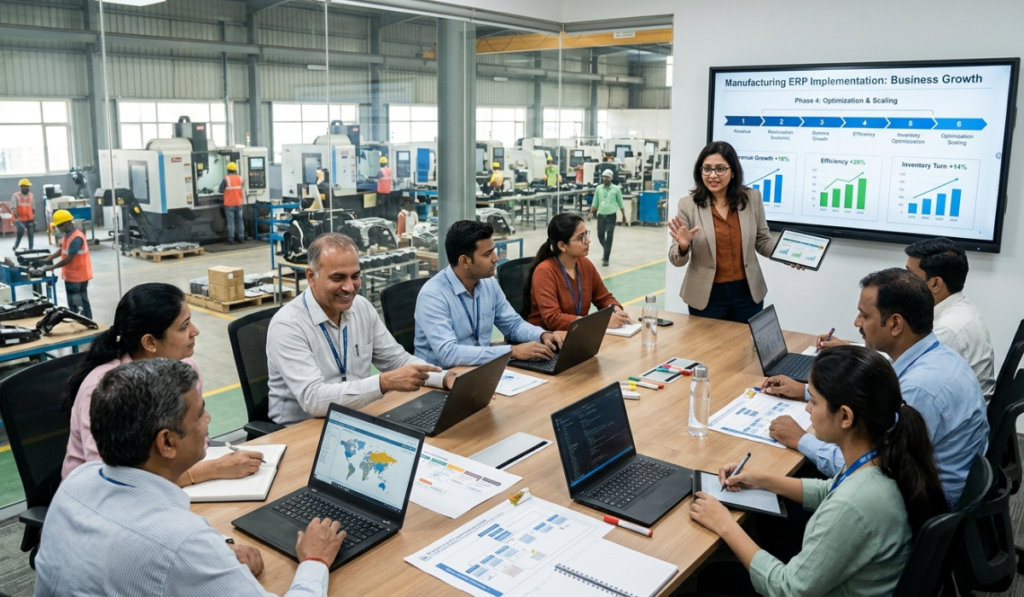
What is Manufacturing ERP Implementation?
Manufacturing ERP implementation refers to the process of planning, configuring, and deploying an Enterprise Resource Planning system specifically designed for manufacturing operations. Unlike generic business software, a manufacturing ERP connects shop floor activities, inventory management, procurement, quality control, and financial reporting into a single system. This allows plant heads, operations teams, and senior management to access real-time data and make informed decisions quickly. For companies planning new plant setup or business expansion in India, ERP implementation is not just a technology upgrade but a strategic foundation for long-term operational success.
Why Manufacturing Companies Need ERP Systems
Manufacturing companies operate in complex environments involving multiple departments, suppliers, and production lines. Without an integrated system, data remains scattered across spreadsheets and disconnected tools, leading to delays and errors. An ERP system brings visibility to raw material availability, production schedules, machine utilization, and order status. This is especially important for entrepreneurs and business owners starting a new manufacturing unit, as it helps establish disciplined processes right from day one rather than fixing issues later when operations become larger and harder to manage.
Key Benefits of ERP Implementation for Business Growth
A well-implemented ERP system directly supports several business goals that manufacturing companies prioritize, including cost control, quality improvement, and process innovation. Below are the core benefits that make ERP implementation valuable for growth-focused organizations.
Improved Operational Efficiency
ERP systems automate repetitive tasks such as order processing, inventory tracking, and production scheduling, which reduces manual effort and human error significantly. When production data flows automatically between departments, operations heads can identify bottlenecks faster and take corrective action before delays affect delivery timelines. This directly supports performance improvement goals that manufacturing plant decision makers focus on every day, especially during periods of expansion or increased order volumes.
Better Cost Control and KPI Tracking
One of the biggest advantages of manufacturing ERP implementation is the ability to define and monitor key performance indicators related to cost, wastage, downtime, and productivity. Finance teams and CXOs get accurate, real-time visibility into cost centers, helping them identify areas where expenses can be reduced without compromising quality. For companies facing performance issues or planning a factory turnaround, this level of cost transparency becomes an essential tool for sustainable decision making.
Enhanced Quality Management
ERP systems support structured quality management by tracking inspection records, defect rates, and compliance requirements at every stage of production. This ensures consistency in product quality, which is critical for manufacturing companies aiming to build long-term customer trust and meet industry standards. Engineering and operations teams can use this data to identify recurring quality issues and implement corrective actions systematically rather than relying on manual checks.
ERP Implementation Process for Manufacturing Plants
Implementing an ERP system in a manufacturing environment requires careful planning and a phased approach to avoid disruption to ongoing operations. The process typically involves several important stages that determine the overall success of the project.
Requirement Assessment and Planning
Before implementation begins, it is essential to understand the specific needs of the plant, including production processes, supply chain requirements, and reporting expectations from senior management. This stage involves close collaboration between plant heads, project heads, and consulting experts to map out current workflows and identify gaps. A clear requirement document ensures the ERP system is configured to match actual business needs rather than generic industry templates.
System Configuration and Customization
Once requirements are finalized, the ERP system is configured to align with specific manufacturing processes such as production line setup, inventory categorization, and quality control checkpoints. Customization may also include integration with existing machinery data systems or supply chain platforms. This stage requires technical expertise combined with practical manufacturing knowledge to ensure the system supports daily operations effectively rather than adding unnecessary complexity.
Employee Training and Change Management
ERP implementation often fails not because of technology issues but due to poor adoption by employees. Training programs must be designed for different user groups, including shop floor workers, supervisors, and management teams, so everyone understands how to use the system correctly. Change management strategies, such as clear communication and phased rollout, help reduce resistance and ensure smoother transition across departments.
Testing and Go-Live Support
Before full deployment, the ERP system undergoes rigorous testing to identify errors and ensure data accuracy across modules. A pilot run on a smaller scale helps identify practical issues before company-wide implementation. Go-live support ensures that any operational disruptions are resolved quickly, minimizing impact on production schedules and customer deliveries during the transition period.
Common Challenges in Manufacturing ERP Implementation
Despite its benefits, ERP implementation comes with challenges that companies must prepare for in advance. Understanding these challenges helps businesses plan more effectively and avoid costly delays.
Resistance to Change
Employees accustomed to traditional methods may resist adopting new systems, especially if they perceive it as adding extra work initially. Clear communication about long-term benefits and proper training can help ease this transition significantly.
Data Migration Complexities
Moving historical data from legacy systems into a new ERP platform requires careful validation to avoid errors. Incomplete or inaccurate data migration can lead to reporting issues later, so this step should never be rushed.
Integration with Existing Systems
Many manufacturing plants use specialized machinery software or legacy tools that need to integrate with the new ERP system. Poor integration planning can create data silos, defeating the purpose of implementing an ERP system in the first place.
Why Expert Consulting Support Matters
Manufacturing ERP implementation involves multiple moving parts, including engineering considerations, supply chain alignment, and organizational readiness. Companies planning new plant setup, expansion, or facility entry into India benefit significantly from expert consulting support that understands both technology and manufacturing operations deeply. Experienced consultants help align ERP implementation with broader business goals such as market entry strategy, joint ventures, or mergers and acquisitions, ensuring the system supports long-term growth rather than just short-term operational needs.
For investors and foreign companies establishing manufacturing facilities in India, working with consultants who understand local regulations, supply chain dynamics, and industry-specific requirements can significantly reduce implementation risks and timeline delays.
Frequently Asked Questions
1. How long does manufacturing ERP implementation typically take?
Implementation timelines vary based on plant size and complexity, but most manufacturing ERP projects take between four to nine months, including planning, configuration, testing, and training phases.
2. Is ERP implementation only useful for large manufacturing companies?
No, ERP systems are scalable and can be customized for small and mid-sized manufacturing units as well, especially those planning expansion or facing operational inefficiencies.
3. What is the biggest risk during ERP implementation?
Poor employee adoption and inadequate training are among the biggest risks, often leading to underutilization of the system even after successful technical deployment.
4. Can ERP implementation help with new factory setup in India?
Yes, ERP systems are especially valuable during greenfield plant setup as they help establish structured processes for production, inventory, and quality management from the very beginning.
5. Do manufacturing companies need consulting support for ERP implementation?
While not mandatory, consulting support helps align ERP systems with specific manufacturing goals, reduces implementation risks, and ensures the project stays on schedule and within budget.