
Setting up a manufacturing facility is a major investment, and controlling Factory Setup Cost in India is one of the biggest priorities for business owners and investors. Every decision, from land selection to equipment procurement, directly impacts the overall project budget and long-term profitability. This guide explains practical cost reduction strategies, common mistakes to avoid, and proven planning methods that help manufacturers establish efficient, scalable, and cost-effective factories while maintaining quality, compliance, and operational excellence.
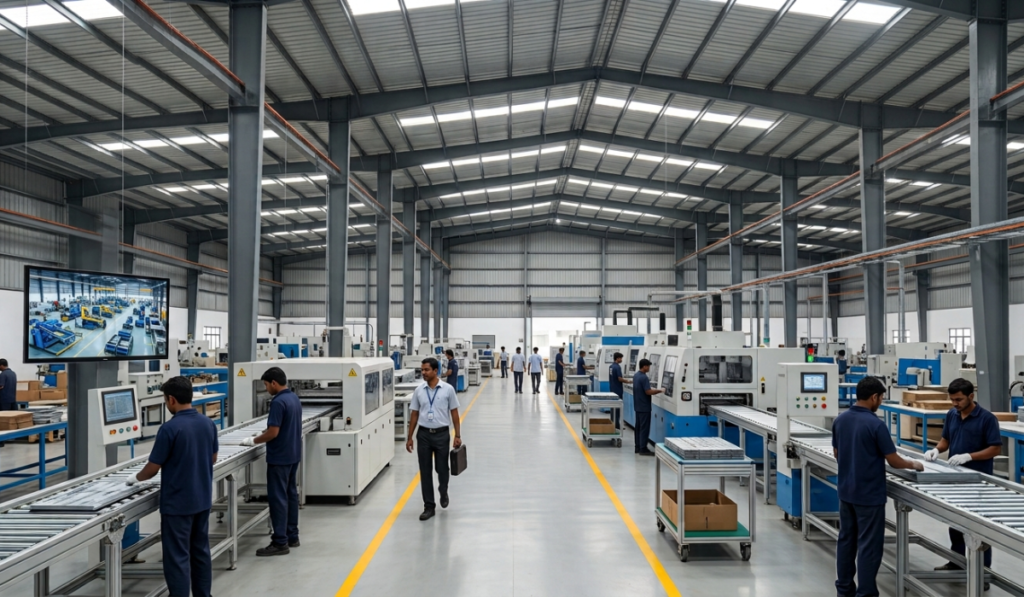
Understanding Factory Setup Cost in India
Factory setup involves much more than constructing a building. It includes land acquisition, statutory approvals, plant design, machinery procurement, utilities, infrastructure, manpower planning, quality systems, production processes, and operational readiness. The total investment depends on several technical and commercial factors.
Many manufacturers underestimate hidden expenses during the planning stage. Delays, design modifications, poor vendor selection, and inefficient layouts often increase project costs significantly. Careful planning before construction begins can reduce unnecessary expenses and improve return on investment.
Businesses that engage experienced manufacturing consultants during the early planning phase typically achieve better cost control because every major decision is evaluated from both financial and operational perspectives.
Why Factory Setup Costs Increase
Understanding the reasons behind cost escalation helps businesses avoid expensive mistakes before they occur.
Poor Project Planning
One of the biggest reasons for budget overruns is inadequate planning. Companies often begin construction before finalizing production capacity, process flow, equipment specifications, or utility requirements.
This results in:
- Frequent design changes
- Construction modifications
- Equipment relocation
- Delayed commissioning
- Higher contractor costs
- Increased project duration
A detailed project roadmap minimizes these risks and keeps the investment under control.
Inefficient Plant Layout
An inefficient factory layout creates long-term operational problems that continue throughout the life of the plant.
Poor layouts often cause:
- Excess material movement
- Higher manpower requirements
- Production bottlenecks
- Increased utility consumption
- Lower productivity
- Future expansion difficulties
An optimized plant layout improves production efficiency while reducing operational expenses from day one.
Incorrect Machinery Selection
Buying oversized equipment or selecting machines based only on purchase price can become an expensive mistake.
The right machinery should match:
- Production volume
- Product mix
- Future expansion plans
- Energy efficiency
- Maintenance requirements
- Automation level
Lifecycle cost is more important than initial purchase cost.
Key Factors Affecting Factory Setup Cost in India
Several variables influence the overall investment required for a manufacturing facility.
Land Location
Industrial land prices vary significantly across states and industrial zones.
Factors include:
- Connectivity
- Availability of utilities
- Government incentives
- Labor availability
- Transportation infrastructure
- Future expansion opportunities
Selecting an industrial cluster often reduces logistics costs while improving supply chain efficiency.
Building Design
Factory buildings should support production rather than simply provide space.
A properly designed facility reduces:
- Construction waste
- Utility costs
- Maintenance expenses
- Material handling time
- Future renovation costs
Smart structural planning also allows capacity expansion without major reconstruction.
Machinery and Equipment
Machinery typically represents one of the largest investments during factory setup.
Cost depends on:
- Technology level
- Automation
- Production capacity
- Imported versus domestic equipment
- Installation complexity
- Utility requirements
Businesses should evaluate total ownership cost rather than focusing solely on purchase price.
Utilities and Infrastructure
Utilities are often underestimated during budgeting.
Major infrastructure costs include:
- Electrical systems
- Compressed air
- Water supply
- Wastewater treatment
- HVAC systems
- Fire protection
- Internal roads
- Warehousing
Proper utility planning prevents expensive redesigns later.
Proven Strategies to Reduce Factory Setup Cost in India
Reducing investment does not mean compromising quality. Instead, it requires strategic planning and informed decision-making.
Conduct a Detailed Feasibility Study
Every successful factory begins with a comprehensive feasibility study.
It evaluates:
- Market demand
- Production capacity
- Capital investment
- Operating costs
- Return on investment
- Risks
- Expansion potential
A feasibility study helps eliminate unrealistic assumptions before major investments are made.
Optimize Plant Layout Before Construction
Factory layout decisions affect productivity for decades.
An optimized layout minimizes:
- Material handling
- Work-in-progress inventory
- Travel distance
- Waiting time
- Space utilization
Digital layout simulations help identify bottlenecks before construction begins, saving both capital and operational costs.
Choose the Right Level of Automation
Automation should match business requirements rather than market trends.
For some manufacturers, semi-automated systems provide better financial returns than fully automated production lines.
Factors to evaluate include:
- Labor availability
- Production volume
- Product complexity
- Return on investment
- Maintenance capability
- Future scalability
Balanced automation delivers maximum value without unnecessary capital expenditure.
Standardize Equipment Specifications
Standardizing machinery across production lines simplifies maintenance and reduces spare part inventory.
Benefits include:
- Lower maintenance costs
- Faster operator training
- Easier procurement
- Reduced downtime
- Improved production consistency
Standardization also strengthens supplier relationships and purchasing power.
Source Equipment Strategically
Competitive vendor evaluation helps reduce procurement costs while maintaining quality.
Businesses should compare:
- Equipment performance
- Warranty
- Service support
- Energy efficiency
- Spare parts availability
- Installation assistance
Selecting suppliers based on long-term value rather than lowest price often produces better financial outcomes.
Reduce Construction Costs Through Better Planning
Construction represents a significant portion of factory investment.
Cost optimization strategies include:
- Finalizing designs before execution
- Avoiding unnecessary structural complexity
- Selecting durable materials
- Coordinating civil and utility work
- Implementing phased construction when appropriate
Construction planning should always align with production requirements rather than architectural preferences.
Improve Energy Efficiency from Day One
Energy costs continue throughout the life of the factory.
Installing energy-efficient systems during construction is more economical than upgrading later.
Consider investing in:
- LED lighting
- Efficient motors
- Variable frequency drives
- Solar energy where feasible
- Heat recovery systems
- Smart energy monitoring
Although initial investment may be slightly higher, operational savings often recover the additional cost within a few years.
Plan for Future Expansion
Many factories become expensive to expand because future growth was not considered during initial planning.
Expansion-ready facilities include:
- Reserved production space
- Utility capacity margins
- Flexible layouts
- Modular buildings
- Scalable automation
- Additional warehouse provisions
Planning for growth today avoids major reconstruction expenses tomorrow.
Take Advantage of Government Incentives
India offers several incentives for manufacturing investments through central and state government programs.
Depending on the location and industry, businesses may receive benefits such as:
- Capital subsidies
- Tax incentives
- Stamp duty exemptions
- Infrastructure support
- Skill development assistance
- Export promotion benefits
Understanding applicable schemes before project execution can significantly reduce overall investment costs.
Common Mistakes That Increase Factory Setup Costs
Many manufacturing projects exceed budget because of preventable errors.
Some of the most common mistakes include:
- Beginning construction without complete engineering
- Selecting land without infrastructure assessment
- Ignoring future expansion needs
- Purchasing equipment without lifecycle analysis
- Underestimating utility requirements
- Poor contractor coordination
- Delayed statutory approvals
- Weak project management
Avoiding these issues helps maintain project timelines and financial discipline.
Why Professional Manufacturing Consulting Makes a Difference
Factory setup involves technical, operational, financial, and regulatory decisions that must work together seamlessly.
Professional manufacturing consultants provide expertise in:
- Greenfield manufacturing setup
- Factory expansion planning
- Process optimization
- Cost reduction strategies
- Plant layout engineering
- Project management
- Quality management systems
- Operational excellence
Their experience helps businesses avoid costly mistakes while improving productivity, scalability, and long-term profitability.
How Pletheon Consulting Helps Manufacturers Reduce Factory Setup Costs
Pletheon Consulting supports manufacturing businesses throughout the complete factory setup journey, from initial concept to operational readiness.
Our consulting approach focuses on:
- Comprehensive feasibility studies
- Strategic project planning
- Cost optimization without compromising quality
- Efficient plant layout development
- Manufacturing process improvement
- Supply chain optimization
- Quality management implementation
- Factory expansion planning
- Operational excellence initiatives
Whether you are establishing a Greenfield manufacturing facility, expanding an existing plant, or optimizing production operations, our experienced consultants help minimize investment risks while maximizing business performance.