
Understanding how to set up a manufacturing plant in India is essential for entrepreneurs, business owners, and companies planning to enter the manufacturing sector. India offers significant opportunities across industries, supported by infrastructure development, government initiatives, and growing domestic demand. However, establishing a factory requires careful planning, financial preparation, regulatory compliance, and operational expertise. This guide explains the manufacturing plant setup process, essential approvals, investment considerations, and practical steps for establishing a successful manufacturing business.
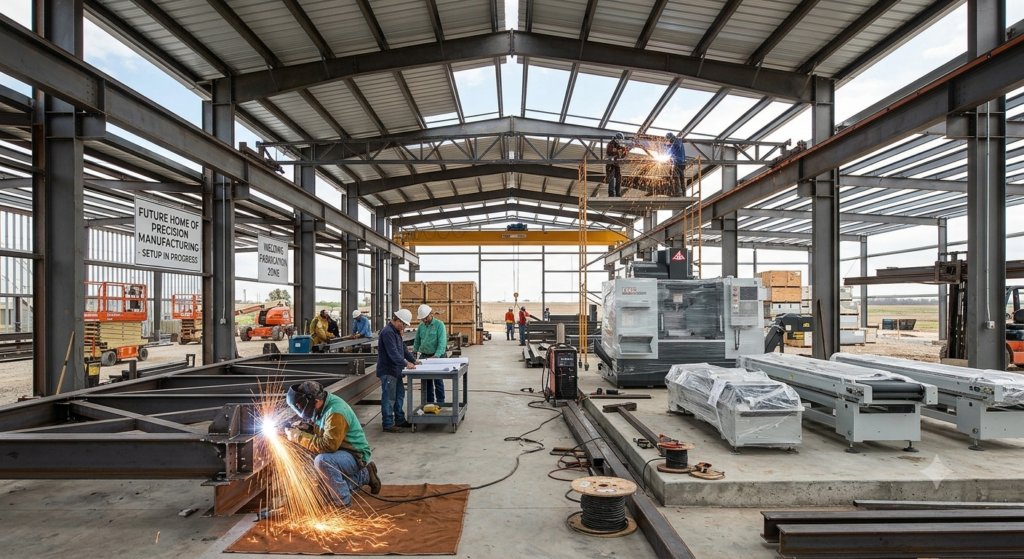
How to Set Up a Manufacturing Plant in India: Step-by-Step Process
Setting up a manufacturing plant involves several interconnected activities, from evaluating market demand and preparing a financial plan to securing industrial land, obtaining licences, and installing machinery. Each stage requires careful coordination to control costs, meet regulatory requirements, and establish an efficient production facility. Following a structured approach helps businesses identify potential challenges early, allocate resources effectively, and prepare for sustainable manufacturing operations.
1. Conduct Market Research and Choose the Right Manufacturing Business
The first step in learning how to set up a manufacturing plant in India is identifying a suitable product and understanding its market potential. Manufacturing businesses require substantial investment, so selecting a product without evaluating demand, competition, and profitability can create financial challenges. Research customer requirements, industry trends, production volumes, and opportunities in domestic and export markets before finalizing your business idea.
Consider industries such as food processing, pharmaceuticals, automotive components, electronics, packaging, textiles, and industrial equipment. Each industry has different investment requirements, technical standards, and regulatory obligations. Evaluate raw material availability, supplier networks, transportation costs, and the expected selling price of your products.
Create a business plan that includes your target customers, production capacity, pricing strategy, estimated expenses, and expected revenue. This research will help you determine whether the proposed manufacturing unit is commercially viable and establish a practical foundation for future investment decisions.
2. Prepare a Detailed Manufacturing Project Report
A detailed project report (DPR) explains how the proposed manufacturing plant will operate and generate revenue. It generally covers the business model, production process, plant layout, machinery requirements, manpower planning, financial projections, and implementation schedule. Banks, financial institutions, investors, and business partners may use this report to evaluate the project’s feasibility and funding requirements.
The report should include capital expenditure, working capital, estimated operating costs, expected sales, and projected profitability. It should also identify major risks, including fluctuations in raw material prices, supply chain disruptions, and changing customer demand. Realistic assumptions are essential because inaccurate projections can result in cash flow problems after production begins.
Professional project planning can help businesses compare alternative production technologies, evaluate plant capacity, and identify cost-saving opportunities. A well-prepared DPR also supports financing discussions and helps decision-makers understand the resources required before committing to a manufacturing investment.
3. Calculate the Cost of Setting Up a Manufacturing Plant in India
The cost of setting up a manufacturing plant in India depends on the industry, production capacity, location, technology, land requirements, and level of automation. A small workshop may require substantially less capital than a large industrial facility with advanced production lines. Therefore, businesses should prepare a project-specific budget rather than relying on a single general investment estimate.
The main cost components typically include:
- Land and building: Industrial land, construction, factory flooring, storage areas, and administrative offices.
- Machinery and equipment: Production machines, installation, testing, tools, and maintenance systems.
- Utilities and infrastructure: Electricity connections, water supply, drainage, ventilation, and fire safety systems.
- Licences and approvals: Applicable registration fees, environmental permissions, inspections, and compliance expenses.
- Human resources: Recruitment, employee training, salaries, and statutory employment costs.
- Working capital: Raw materials, packaging, transportation, inventory, and daily operating expenses.
For example, a packaging unit and an automotive component plant may have completely different machinery and infrastructure budgets. Include contingency funds for unexpected expenses and delays. Accurate financial planning helps businesses estimate manufacturing plant investment in India and avoid funding shortages during construction or initial operations.
4. Select Suitable Industrial Land and Location
Choosing the right location is one of the most important factory setup requirements in India. The selected site should provide suitable land-use permissions, reliable transportation access, sufficient utilities, and proximity to suppliers or customers. Businesses should also consider labour availability, logistics expenses, industrial ecosystem development, and the possibility of future expansion.
Industrial land for manufacturing plants may be available through industrial development authorities, government industrial estates, private industrial parks, and other legally compliant property arrangements. Before purchasing or leasing land, verify ownership documents, permitted industrial use, access roads, site conditions, and applicable development regulations.
Location decisions should also account for environmental restrictions and industry-specific requirements. For example, a chemical manufacturing facility may require additional environmental safeguards, while a food processing unit may need appropriate water quality, hygienic production areas, and waste management facilities.
Evaluate the total cost of operating at each location instead of comparing land prices alone. A slightly more expensive site with better infrastructure and logistics connectivity may reduce long-term operating costs and improve production efficiency.
5. Complete Business Registration and Obtain Required Licences
Understanding the licences required to set up a factory in India is essential before beginning construction or commercial production. The exact approvals depend on the business structure, factory size, number of workers, manufacturing activity, location, and environmental impact. Businesses should prepare a compliance checklist based on the applicable central, state, and local regulations.
Common registrations and approvals may include:
- Business incorporation or registration, where applicable.
- PAN and applicable tax registrations, including GST registration when required.
- Factory plan approval and factory licence under the applicable legal framework.
- Consent to Establish and Consent to Operate from the relevant State Pollution Control Board, where applicable.
- Fire safety approval and building-related permissions, where required.
- Electricity connection and other utility approvals.
- Udyam registration for eligible micro, small, and medium enterprises.
- Industry-specific permissions, such as food safety, drug manufacturing, or other regulated-product licences.
Requirements can change according to the applicable laws and state procedures. For example, food manufacturing businesses may need registration or licensing from the Food Safety and Standards Authority of India, depending on their activities and eligibility. Verify current requirements with the relevant authorities or qualified compliance professionals before proceeding.
6. Arrange Finance and Plan Manufacturing Plant Investment
A manufacturing business needs sufficient funding for both establishing the facility and maintaining operations until revenue becomes stable. Manufacturing plant investment in India may come from personal capital, business partners, bank loans, institutional financing, or eligible government-supported schemes. The appropriate funding structure depends on the project’s financial strength, risk profile, and repayment capacity.
Prepare a detailed financial model covering machinery purchases, construction expenses, installation, employee costs, raw materials, inventory, and customer payment cycles. Working capital deserves particular attention because manufacturers often need to purchase materials and pay employees before receiving payments from customers.
Businesses may investigate applicable credit facilities, MSME support programmes, and state industrial incentives. Eligibility, benefits, documentation, and application procedures vary, so incentives should not be treated as guaranteed funding. Confirm current scheme conditions through official government sources.
A realistic funding strategy should also account for delayed approvals, construction overruns, and slower-than-expected sales. Maintaining adequate financial reserves can help prevent operational disruptions during the early stages of manufacturing.
7. Purchase Machinery and Develop Factory Infrastructure
Selecting appropriate machinery and equipment for manufacturing plants directly influences production quality, output, operating expenses, and workplace safety. Businesses should compare equipment specifications, production capacity, energy consumption, maintenance requirements, availability of spare parts, and supplier support before making purchasing decisions.
Determine whether the production process requires manual equipment, semi-automated systems, or fully automated machinery. Request quotations from multiple suppliers and evaluate the complete ownership cost, including transportation, installation, commissioning, training, and maintenance. Imported machinery may also involve customs duties, applicable taxes, and additional logistics expenses.
Manufacturing plant infrastructure requirements include suitable factory flooring, electrical distribution, ventilation, water supply, drainage, storage areas, fire protection, waste management, and safe movement of workers and materials. Infrastructure must be designed around the production process rather than added as an afterthought.
A practical factory layout reduces unnecessary material handling, improves workflow, and supports quality control. Conduct installation checks, equipment testing, and trial production before starting full-scale manufacturing. Proper commissioning helps identify technical problems early and prepares employees to operate the plant safely and efficiently.
8. Recruit Employees and Establish Quality Control Systems
A manufacturing plant requires trained employees who understand production procedures, equipment operation, workplace safety, and quality standards. Depending on the facility, the workforce may include production operators, maintenance technicians, engineers, supervisors, quality inspectors, warehouse staff, and administrative personnel.
Prepare a staffing plan according to production capacity and operating shifts. Establish clear responsibilities, provide machinery-specific training, and implement workplace safety procedures before employees begin regular production. Applicable employment laws, wage requirements, social security obligations, and occupational safety regulations must also be considered.
Quality control should be integrated into the manufacturing process from the beginning. Define product specifications, inspection procedures, acceptable defect levels, material testing requirements, and documentation practices. Depending on the industry, businesses may also consider relevant certifications and management systems, such as ISO 9001 quality management certification.
Regular performance reviews, preventive maintenance, and production monitoring help identify inefficiencies. These practices support consistent product quality, reduce material waste, and strengthen customer confidence as the manufacturing business grows.
9. Follow the Manufacturing Plant Setup Process with Professional Planning
The manufacturing plant setup process involves coordinating multiple activities, including project feasibility, land selection, financing, engineering design, construction, machinery procurement, regulatory approvals, recruitment, and trial production. These activities may overlap, but their sequence must be carefully managed to prevent delays and unnecessary expenses.
Create an implementation schedule with clear milestones, responsible teams, estimated budgets, and approval dependencies. Track construction progress, equipment delivery, utility connections, and documentation requirements throughout the project. Regular monitoring helps identify problems early and supports better coordination between contractors, suppliers, consultants, and internal teams.
Factory setup and business consulting services can assist with project planning, feasibility assessments, location evaluation, financial modelling, infrastructure planning, and regulatory coordination. Pletheon Consulting can be positioned as a business consulting partner for companies seeking structured guidance throughout manufacturing project development.
For new entrepreneurs and expanding manufacturers, professional planning can help clarify complex requirements and improve decision-making. The objective is to establish a compliant, financially viable, and operationally efficient manufacturing facility that supports long-term business growth.
10. Complete Government Approvals and Prepare for Commercial Production
Before starting manufacturing operations, verify that all applicable government approvals for manufacturing units have been obtained and that the facility meets relevant safety, environmental, building, and operational requirements. Approval conditions depend on the industry and location, so businesses should maintain a clear record of licences, inspection reports, consent orders, and renewal dates.
Arrange final machinery inspections, utility testing, employee training, raw material procurement, and trial production. Trial runs help evaluate production capacity, product quality, equipment performance, and workflow efficiency under actual operating conditions. Any technical issues should be resolved before commercial production begins.
Develop standard operating procedures for production, maintenance, inventory management, emergency response, and quality assurance. Establish a system for tracking output, rejection rates, equipment downtime, energy consumption, and delivery performance. These measurements provide practical insights into plant efficiency and operating costs.
A structured commissioning process helps manufacturers move from construction to stable production with fewer avoidable disruptions. Businesses should continue reviewing compliance obligations and operational performance after launch to support consistent quality, sustainable growth, and future expansion.
Frequently Asked Questions (FAQs)
1. How much does it cost to set up a manufacturing plant in India?
The cost of setting up a manufacturing plant in India depends on the industry, plant capacity, land prices, machinery, construction, and regulatory requirements. Small manufacturing units may need a comparatively modest investment, while large automated facilities can require substantial capital. A detailed project report provides a more reliable estimate by accounting for fixed assets, working capital, installation, and contingency expenses.
2. What licences are required to start a manufacturing unit in India?
Licences and registrations depend on the manufacturing activity, location, workforce, and applicable regulations. Common requirements may include business registration, applicable GST registration, factory plan approval and licensing, pollution control permissions, fire safety approval, and industry-specific licences. Food, pharmaceutical, and chemical businesses may have additional obligations. Confirm the latest requirements with the relevant authorities before starting operations.
3. How long does it take to set up a manufacturing plant?
The timeline depends on land availability, project size, construction complexity, machinery delivery, financing, and approval procedures. A small unit using an existing industrial building may become operational sooner than a large facility requiring extensive construction and specialised equipment. Businesses should prepare a realistic implementation schedule covering planning, approvals, construction, installation, recruitment, testing, and commissioning.
4. What are the main steps to establish a manufacturing unit in India?
The main steps include conducting market research, preparing a project report, estimating investment, selecting industrial land, arranging finance, obtaining applicable licences, developing infrastructure, purchasing machinery, recruiting employees, and conducting trial production. Coordinating these activities through a detailed project plan helps manage costs, reduce delays, and prepare the facility for commercial operations.
5. Are government schemes available for manufacturing businesses in India?
Eligible manufacturing businesses may benefit from certain central or state government schemes, MSME support programmes, credit facilities, or industry-specific incentives. Availability depends on the business category, investment, location, sector, and scheme conditions. Entrepreneurs should verify eligibility, application deadlines, required documentation, and current benefits through official government portals before including incentives in their financial projections.